
Quick answer: Assisted living helps largely independent older adults with everyday tasks like medication, meals, and bathing. Memory care is a more specialized, secured form of care for people living with Alzheimer’s and other dementias, with staff trained in cognitive care and present around the clock. Many older adults move from assisted living to memory care as their needs change. The key question is often not only which level of care is right today but whether a community can provide the right level of memory care as needs progress.
Memory Care vs. Assisted Living: What’s the Difference?
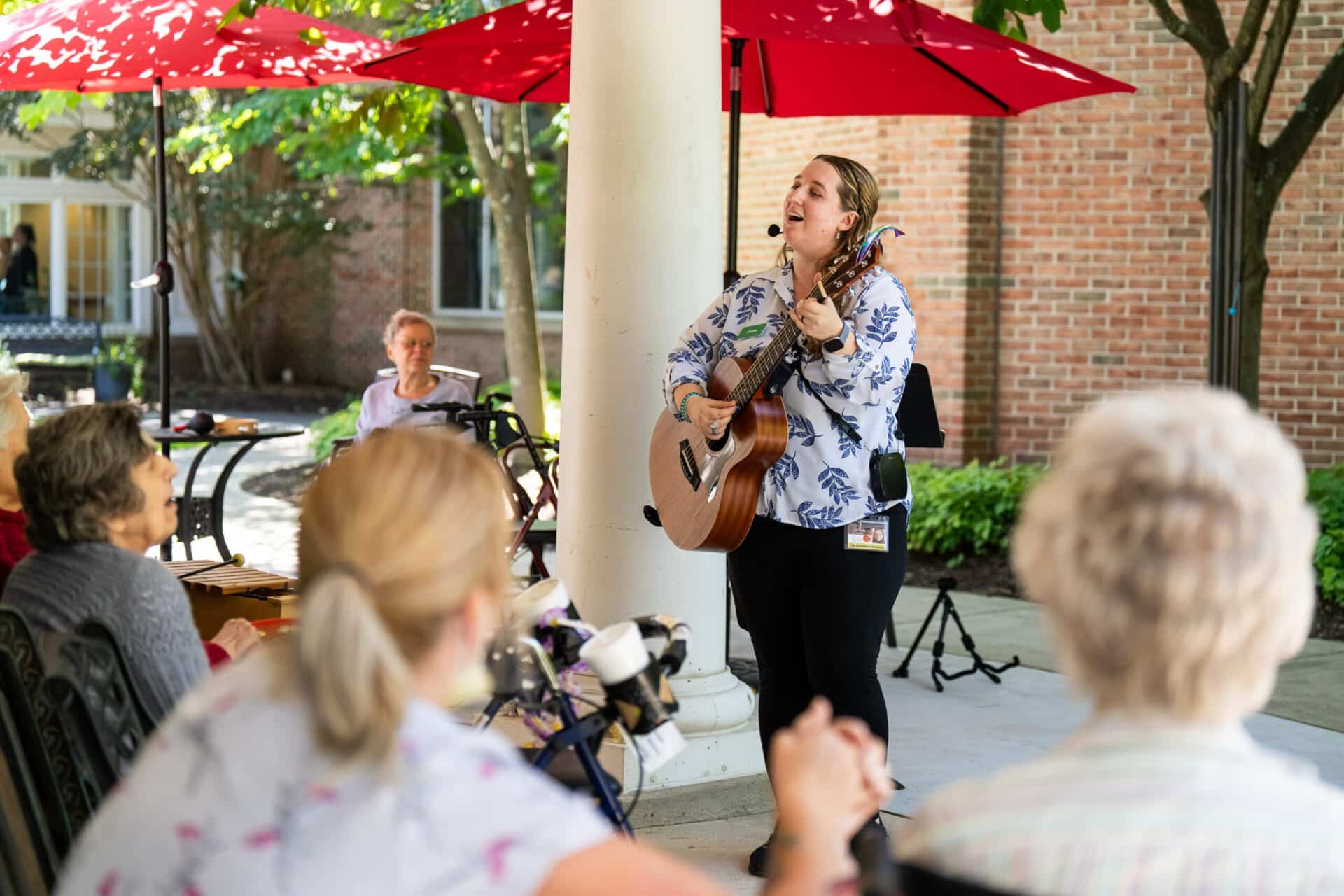
If you are comparing memory care vs. assisted living, you are likely trying to match a community to where your loved one is right now — and concerned about getting it wrong.
The two terms are often used in the same breath, and many communities offer both, but they serve different needs. Understanding the difference helps you choose with confidence and avoid a disruptive move later.
Below is a clear comparison, along with one factor most families fail to consider until it matters most.
What Is Assisted Living?
Assisted living is residential care for older adults who are largely independent but need help with some activities of daily living (medication management, bathing, dressing, meals, or housekeeping) in a social, residential setting. Residents usually have their own apartment and a good deal of freedom and choice in their day.
A note on terms: Pennsylvania senior living communities can offer personal care or assisted living. Because these are similar levels of care, the terms are often confused. Living Branches offers personal care and skilled nursing care. For simplicity, this article uses the term “assisted living” when describing the category in general.
What Is Memory Care?
Memory care is a specialized type of care designed specifically for people living with Alzheimer’s and other forms of dementia. It combines a secure, dementia-friendly environment with a team trained in cognitive care, available 24 hours a day, and a daily routine built around engagement, dignity, and safety.
Importantly, memory care can be delivered at more than one level of care. This becomes essential as a person’s health needs change over time.
“Assisted living offers some extra support in day-to-day living,” explains Jen Derstine, senior director of Personal Care Services at Souderton Mennonite Homes. “Memory care is built around the needs of a person with Alzheimer’s or dementia. It’s an additional level of support, not either-or. So it’s assisted living care plus support for memory, sensory, and cognitive challenges in a specialized living space.”
Memory Care Vs. Assisted Living: The Key Differences
| Factor | Assisted living | Memory care |
|---|---|---|
| Who It’s For | Largely independent older adults who need some daily help | People living with Alzheimer’s or another type of dementia |
| Environment | Private apartments on an open, residential campus | Secured, dementia-friendly neighborhood designed to reduce confusion and agitation |
| Caregiver Training | General senior-care team members trained to help with activities of daily living | Dementia-trained caregivers who help with activities of daily living and provide dementia care |
| Daily Life | Activities and dining residents choose freely | Structured, purposeful routine designed for cognitive engagement |
| Dining | Restaurant-style dining with wait staff providing table service | Hands-on mealtime support and adaptation |
| Best For | Help with everyday tasks | Safety, behavioral support, and around-the-clock care |
Environment and Security
This is the biggest difference. Assisted living is an open, residential setting where residents come and go as they wish. Memory care is purpose-built for cognitive and memory impairment. It offers secure entrances and outdoor spaces that minimize unsafe wandering, layouts that reduce confusion and fall risk, and design cues that help residents orient themselves.
The Care Team
In both settings care is available around the clock. The difference is what the team is trained for. Assisted living (personal care) team members offer help with daily tasks and routines and can support residents with mild memory loss.
In memory care, moderate-to-advanced dementia is the entire focus, so caregivers carry a deeper level of training and experience. They know how to communicate, redirect, and de-escalate, and how to read needs a person can no longer put into words. Memory care team members meet moments like agitation, confusion, and restlessness as a matter of routine, not exception.
Daily Life and Engagement
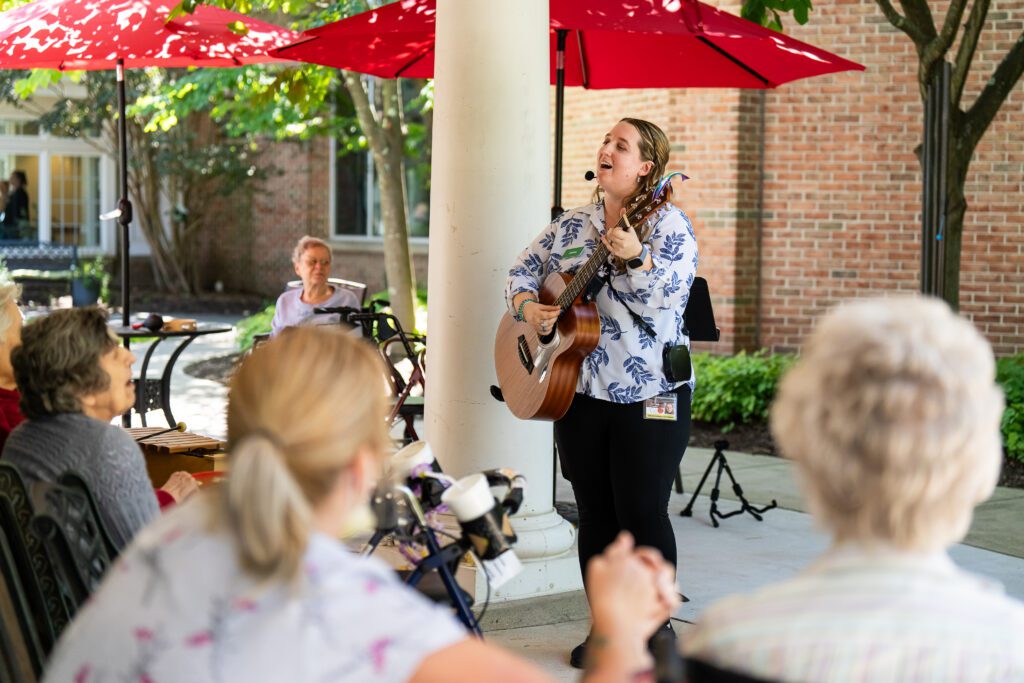
In assisted living, residents largely shape their own days. In memory care, the day is gently structured to provide engagement, routine, and a sense of purpose. Research links purposeful activities to calmer, more meaningful days for people living with dementia.
Which One Does My Loved One Need?
If you’re weighing the two, the right fit usually becomes clear when you look at your loved one’s daily routine. Someone who is largely independent but needs help with daily tasks fits assisted living (personal care). Someone whose dementia has created safety concerns (wandering, confusion, difficulty managing medications or behaviors) will live better in memory care.
The gray area is early-stage dementia. A person may do well in personal care for a time, with caregivers watching for subtle changes, and move into memory care when safety and dementia-trained care matter most.
The advantage of a community that offers both is that this transition can happen smoothly, with people who already know your loved one.
“One of the advantages of living in a community that offers personal care and memory care at the personal care level is that caregivers are trained to notice as things progress, and equipped to make a recommendation if needed,” Derstine notes. “It’s as simple as moving to a different area in a building, rather than an entirely different building or town.”
The Long View: Memory Care That Continues in Skilled Nursing
Here’s an important factor that rarely comes up on a first tour. Dementia is progressive, and the physical health needs that come with it worsen over time. At some point many people with dementia need skilled nursing care.
The catch: many communities offer memory care only at the assisted living level. When health needs outgrow that, the resident is often moved to a standard skilled nursing setting where the staff aren’t dementia specialists. They lose specialized cognitive care when it’s still very much needed.
It’s worth asking any memory care community you consider one simple question: do you offer memory care at the skilled nursing level, too?
At Living Branches, the answer is yes. The Serenata Memory Care program spans both the personal care (assisted living) level and the skilled nursing level, so a resident’s cognitive and physical needs are met together as the disease advances.
This is the question most families don’t know to ask — and it matters a great deal. We wrote a whole guide to it: The Question Most Families Don’t Ask When Touring Memory Care.
What Makes Serenata Memory Care Different
Beyond offering all levels of care, a few things set Serenata Memory Care apart for families across Montgomery County and the Lansdale and Souderton area.
Spaces That Feel Like Home, Not an Institution
Serenata Memory Care spans four neighborhoods across two campuses – Dock Woods in Lansdale and Souderton Mennonite Homes in Souderton.
Most of them are new: the Serenata Personal Care and Serenata Health Care neighborhoods at Souderton Mennonite Homes welcomed residents in early 2025, and the Serenata Health Care neighborhood at Dock Woods opened in 2023.
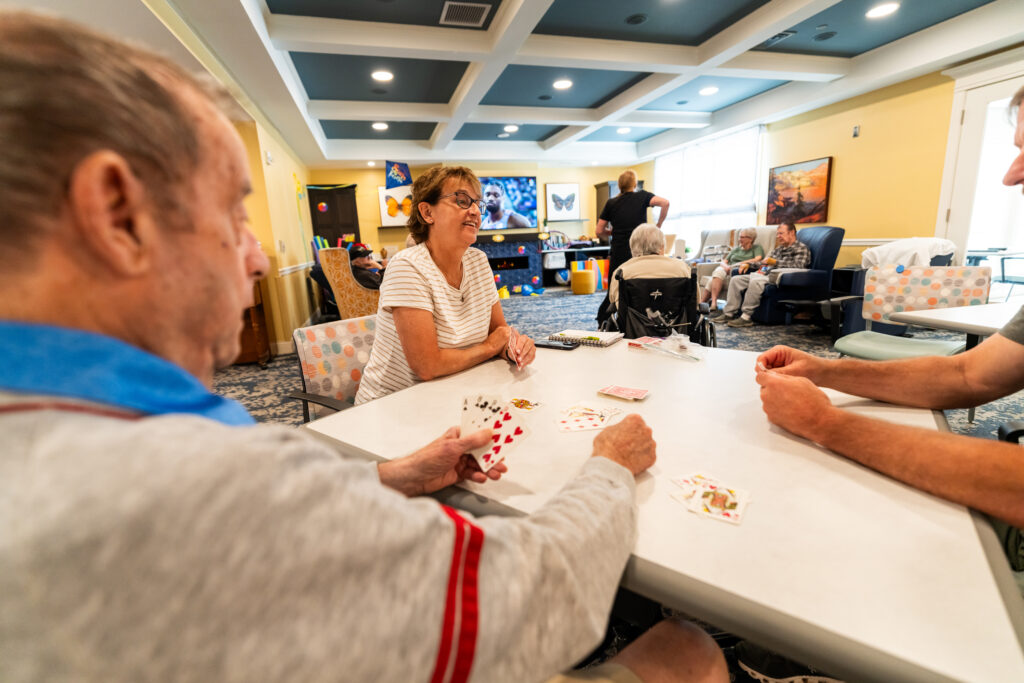
These are intentionally designed to feel like a warm, tastefully decorated home rather than a clinical facility – safe and built around community, but never dark, quiet, or sad.
A Montessori-Inspired Approach to Engagement
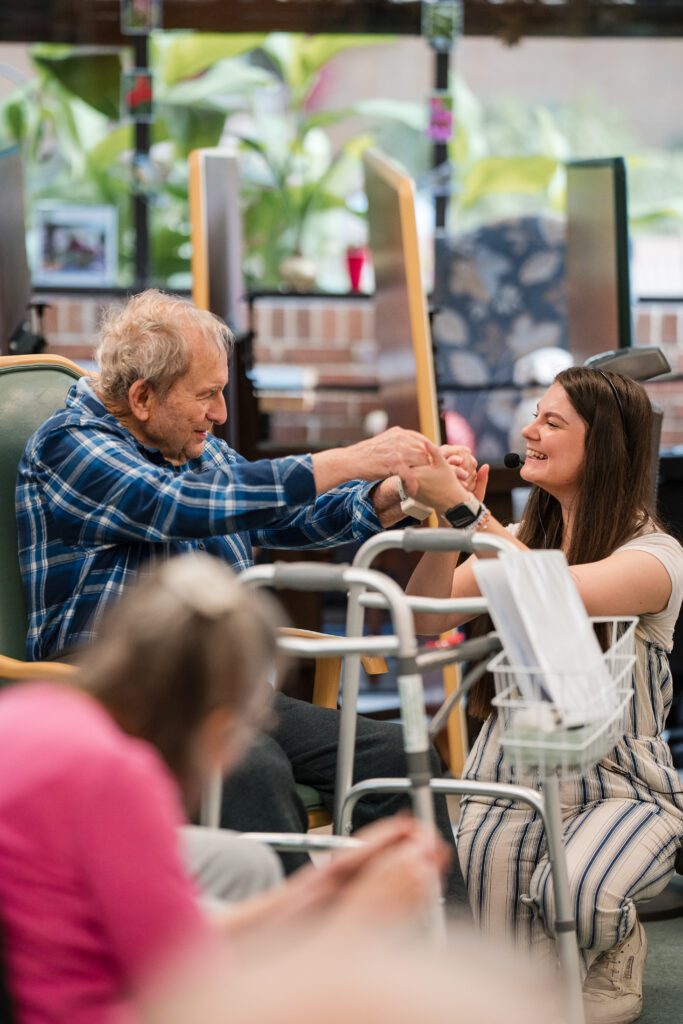
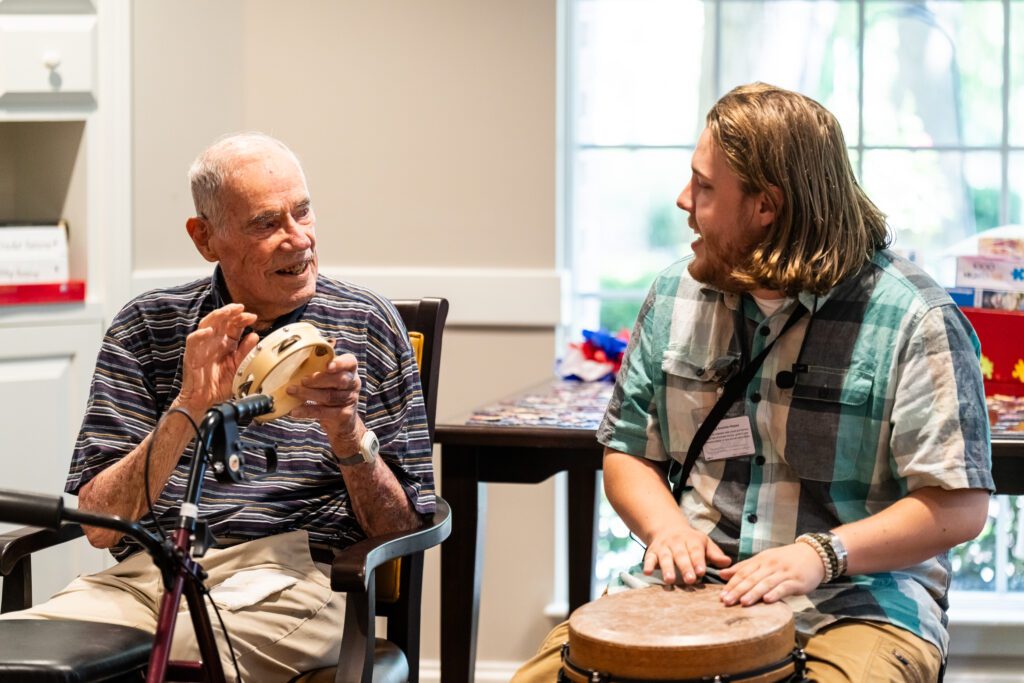
People sometimes picture memory care as residents sitting quietly or wandering with little to do. That is not what happens in these neighborhoods. Serenata uses a Montessori-inspired approach and a strong life-enrichment program: cafe and shop areas, creative arts therapy including music, movement, and gardening. The goal is purpose and engagement – meeting residents where they are and helping them stay connected to the things that bring them joy.
“The goal is to cultivate purpose and joy,” says Annette Echanis, director of resident engagement for Living Branches. “When we meet residents where they’re at, they stay connected to things that make life meaningful and rich. That means knowing each resident as a unique individual and then working to provide them what they need, whether that’s a new role, a refitted space, a modified activity, or something else entirely.”
Care Teams Certified in the Dementia Capable Care Approach
All four Serenata neighborhoods are supported by care teams certified in the Dementia Capable Care approach. This is a rare distinction in the world of dementia care.
Dementia Capable Care is an evidence-based model that blends person-centered care, an understanding of each resident’s cognitive abilities, and proven techniques for preventing and easing distress.
In plain terms, it means the people caring for your loved one are trained to support what they can still do, and to respond skillfully when dementia makes the day harder.
Wondering whether assisted living or memory care is the right next step for your loved one? Schedule a visit to see our Serenata Memory Care neighborhoods in Montgomery County, or talk with our team about where your loved one is today and what the right level of support looks like – now and down the road.
Frequently Asked Questions
Assisted living supports largely independent older adults with everyday tasks like medication, meals, and bathing. Memory care is a secure, specialized setting for people with Alzheimer’s or another dementia, with staff trained in cognitive care. The simplest test: assisted living is about help with activities of daily living; memory care offers this plus additional safety and dementia-specific support.
Many communities offer both, so a resident can receive memory care without leaving for an entirely new provider. At Living Branches, memory care is offered through the Serenata Memory Care program at both the personal care (assisted living) level and the skilled nursing level, so care can adjust as needs change.
The residential level of care that most of the country calls assisted living is licensed as either assisted living or personal care in the state of Pennsylvania. The terms are used interchangeably in everyday conversation, but there are a few differences between them. Living Branches offers personal care and skilled nursing.
Some do, but many provide skilled nursing without dementia-trained team members. This means a person with advanced dementia and high medical needs may lose specialized cognitive care. Living Branches offers memory care at the skilled nursing level through Serenata Health Care, so physical and cognitive needs are met together by teams trained in dementia care.
Memory care neighborhoods are secured to prevent unsafe wandering, but a well-designed community does not feel restrictive. Serenata Memory Care neighborhoods include secured indoor and outdoor spaces designed to feel like a home.
Living Branches offers Serenata Memory Care at two Montgomery County campuses — Dock Woods in Lansdale and Souderton Mennonite Homes in Souderton — serving families across the Lansdale and Souderton area and nearby Bucks County.