
Quick answer: When touring a memory care community, ask whether they also provide memory care at the skilled nursing level, not only the assisted living level. Dementia is progressive, and many people eventually need skilled nursing care. If a community offers memory care only at the assisted living level, your loved one may later be moved to a standard skilled nursing setting where staff are not trained in dementia, losing the specialized cognitive care they still need.
The Question Most Families Don’t Ask When Touring Memory Care
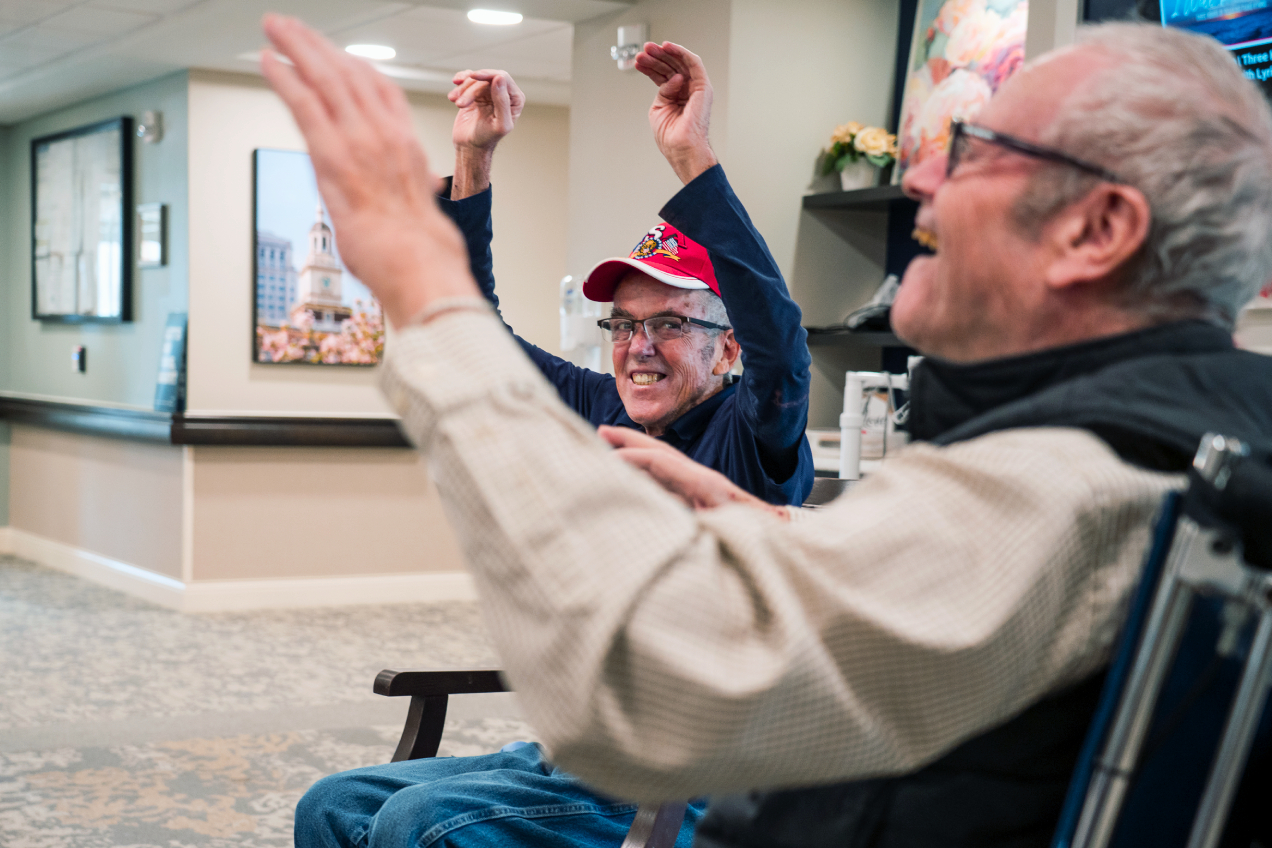
Touring memory care communities can start to feel repetitive. You walk the halls, you look at the rooms, you ask about meals and activities and staff ratios — the questions every checklist tells you to ask because they are good questions.
But there is one most families never think to ask, and it shapes a loved one’s life more than almost anything on the standard list: what happens to their memory care as the disease advances?
Why This Question Matters
Dementia is progressive. Over time, it is not only memory and cognition that change; physical health needs advance as well. Seniors with moderate to advanced dementia typically have:
- Unsteady gait that makes it hard to walk
- Trouble swallowing
- Weight loss and difficulty eating
- Incontinence
- Vulnerability to infections
- Full dependence on caregivers for activities of daily living
Eventually many people living with dementia need skilled nursing care, which is a higher level of medical support than assisted living or personal care.
But here’s the thing most families don’t discover until they are in the middle of it: many senior living communities offer memory care only at the assisted living level.
That means when a resident’s health needs outgrow that level, they may be moved into a standard skilled nursing setting. In these spaces, the nurses and aides may not be dementia specialists and the building not designed with cognitive impairment in mind.
At the very moment a person needs both more medical care and the dementia-trained support that has kept them calm and safe, they lose half of it.
“More retirement communities should offer memory care at the skilled nursing level, but unfortunately many do not,” says Annette Echanis, director of resident engagement for Living Branches. “When residents with dementia only receive care for physical health but not their emotional and mental health, it’s obvious. You see more confusion, agitation, and behaviors that impact their fellow residents. Team members can also feel overwhelmed when they’re not able to fully care for residents.
“Pairing memory care and skilled nursing just an extra feature,” Echanis continues. “For some families, it provides a necessary blend of health care and memory care.”
Skilled Nursing Is Getting Harder to Find, Not Easier
This problem is quietly getting worse. Even as the population ages and more families need this care, skilled nursing capacity has been shrinking. NIH’s National Institute on Aging reports that fewer than 5 percent of all U.S. nursing home beds are in a “special care unit” intended for individuals with dementia.
Pair that with the fact that roughly 48 percent of nursing home residents are living with some form of dementia and the outcome is startling. Nearly half of nursing home residents have dementia, yet fewer than one in twenty nursing home beds is in a setting designed for it.
This is a national problem that Pennsylvania has not escaped. According to a LeadingAge PA report from April 2026, 37 Pennsylvania nursing homes have closed, and more than 4,000 beds certified for skilled nursing have been decertified since 2020.
LeadingAge PA calls this an “access-to-care crisis” for Pennsylvanian seniors who need skilled nursing care.
The Question to Ask (And What a Good Answer Sounds Like)
When home care for a person with dementia isn’t cutting it anymore, you have a thousand questions running through your mind. You’re considering safety, dietary needs, cost, what they’ll spend their time doing, how agitation or confusion will be addressed, maybe even selling a home.
“As long as your list of questions is, families benefit from adding one more,” says Hannah Carhart, a care coordinator at Dock Woods. “Your loved one might not need skilled nursing care now, but dementia is a progressive disease. There’s a good chance that skilled nursing care will be in their future.”
When you tour any memory care community, ask plainly: Do you provide memory care at the skilled nursing level, or only at the assisted living level?
| Questions to Ask | Reassuring Answer | Concerning Answer |
|---|---|---|
| Do you provide memory care at the skilled nursing level? | Yes, we offer memory care at the assisted living (or personal care) level and separately at the skilled nursing level. Residents who need skilled nursing and residents who would benefit from skilled nursing plus memory care both get what they need. | When residents need skilled nursing, they’re transferred to our skilled nursing facility. |
| We would help you find a skilled nursing placement elsewhere. | ||
| Our skilled nursing neighborhood has plenty of residents with dementia. The nurses are used to it. | ||
| Are the team members in skilled nursing certified in providing dementia care? | Yes, our teams earn certification from Dementia Capable Care (or another third party institution). | We do our own in-house training. |
| We bring in a speaker once a year. | ||
| Is the skilled nursing area specially designed for the needs of residents living with dementia? | Yes, the space is purpose-built for dementia, including a layout that aids orientation, proper signage, and sensory and sleep supports. | The skilled nursing area is primarily intended to provide a high level of nursing care. |
How Living Branches Answers This Question
The Serenata Memory Care program spans both levels of care: Serenata Personal Care provides memory care at the assisted living (personal care) level, and Serenata Health Care provides memory care at the skilled nursing level.
Because we offer skilled nursing with a memory care specialty — which many communities do not — a resident’s cognitive and physical needs are met together, by teams trained in dementia, even as the disease advances.
When more medical care becomes necessary, it does not mean leaving dementia-specialized support behind. It is still a move, but it is a move within the same program, usually on the same campus, with people who already know your loved one. No need to start over from scratch in an unfamiliar place.






Design Features in Serenata Memory Care
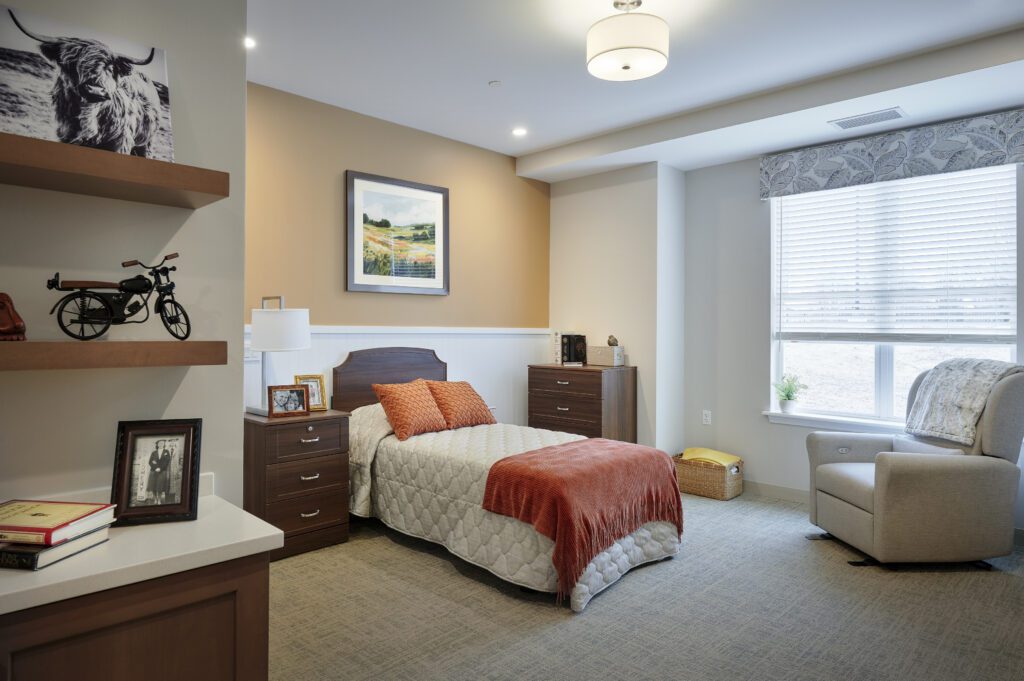
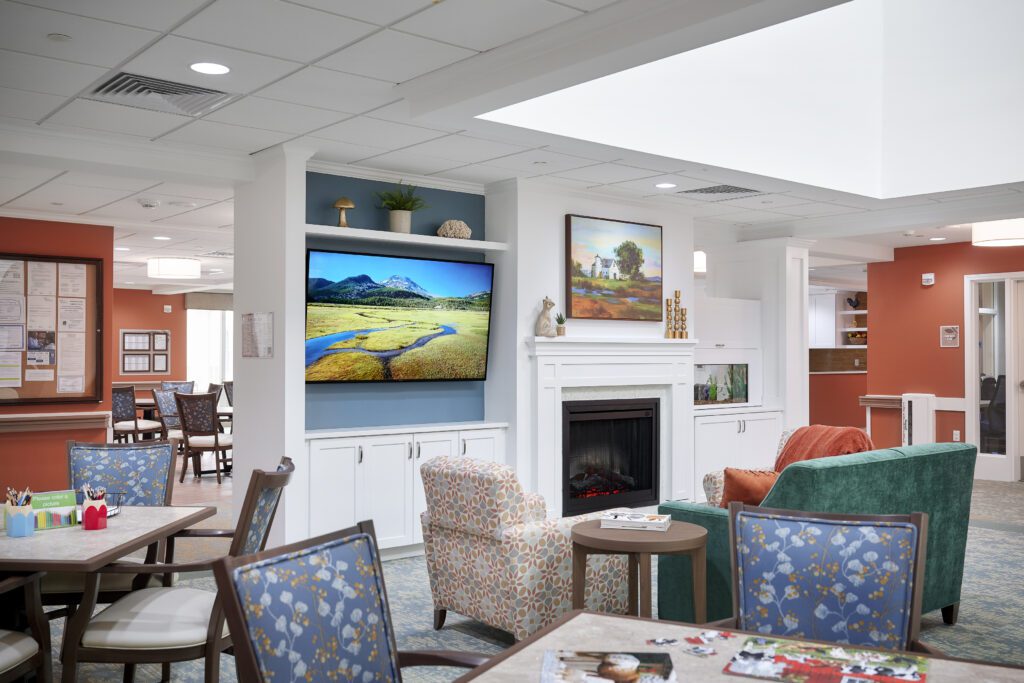
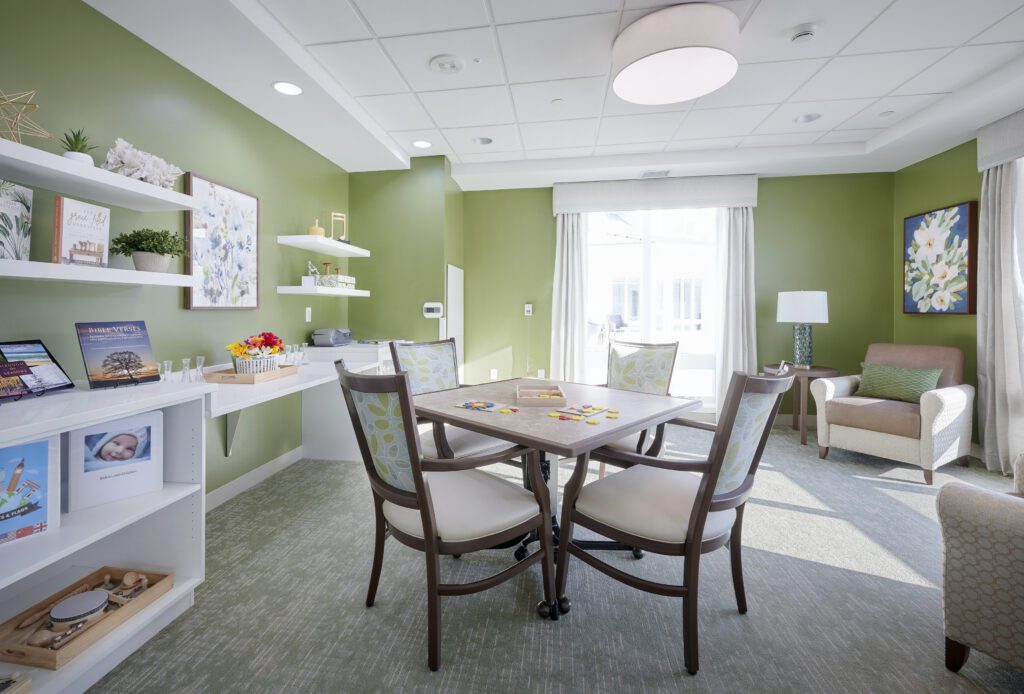
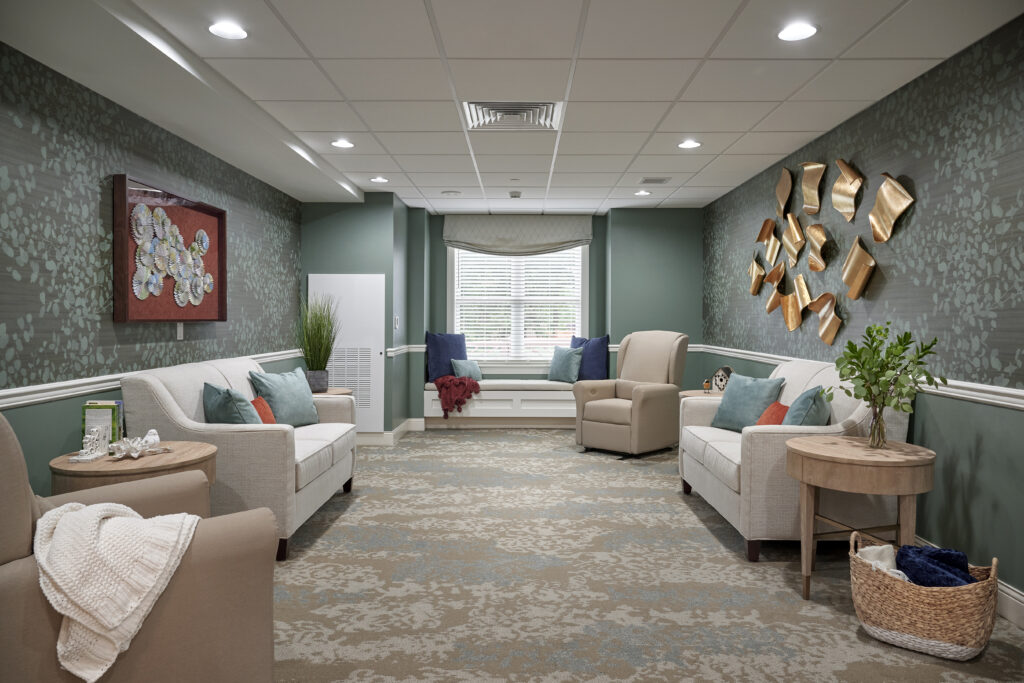
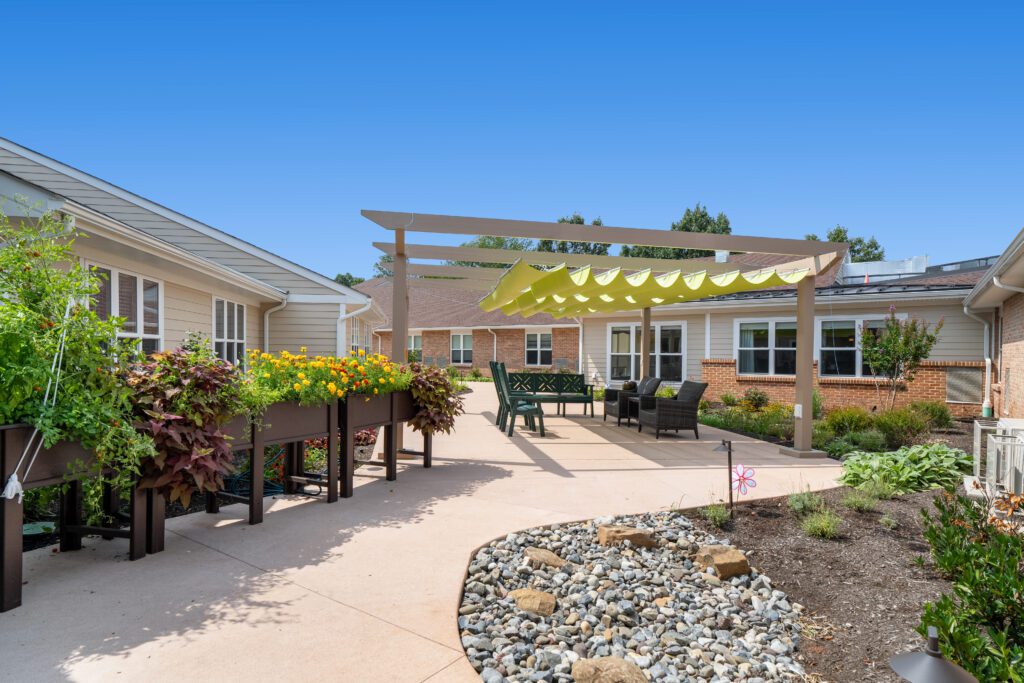
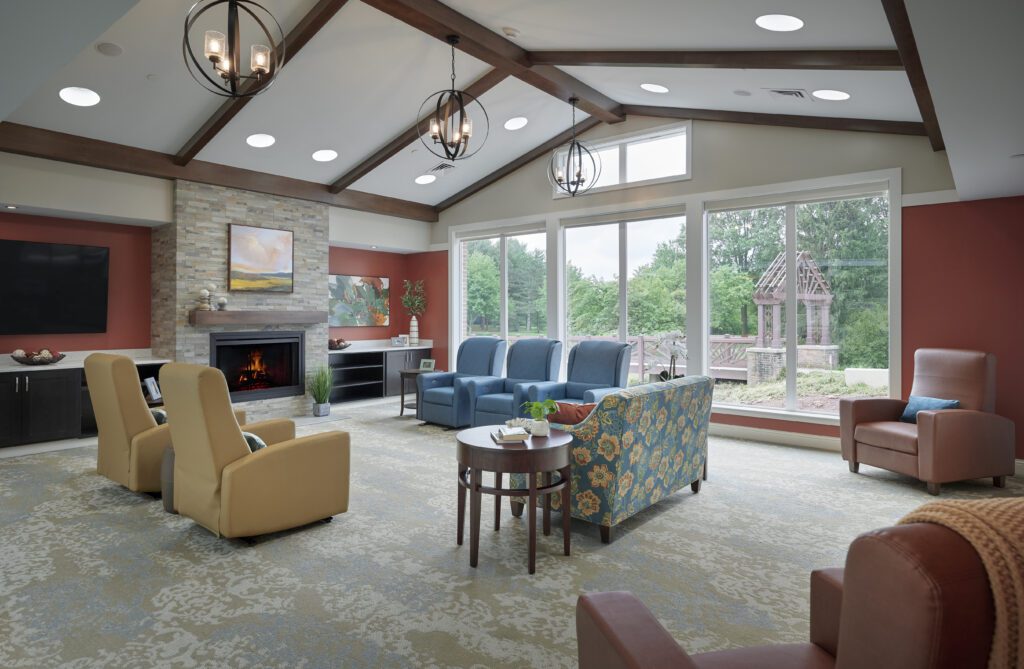
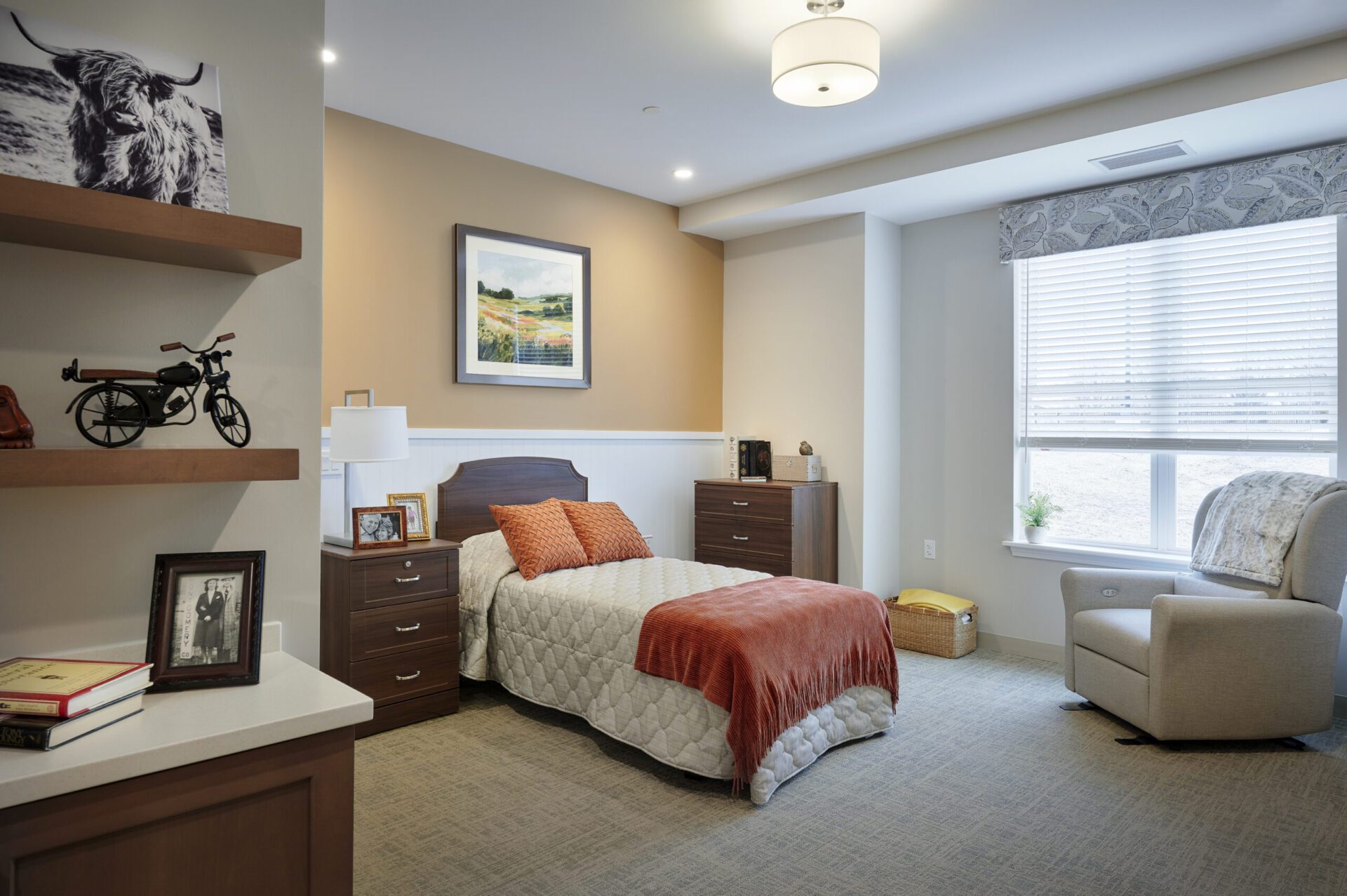
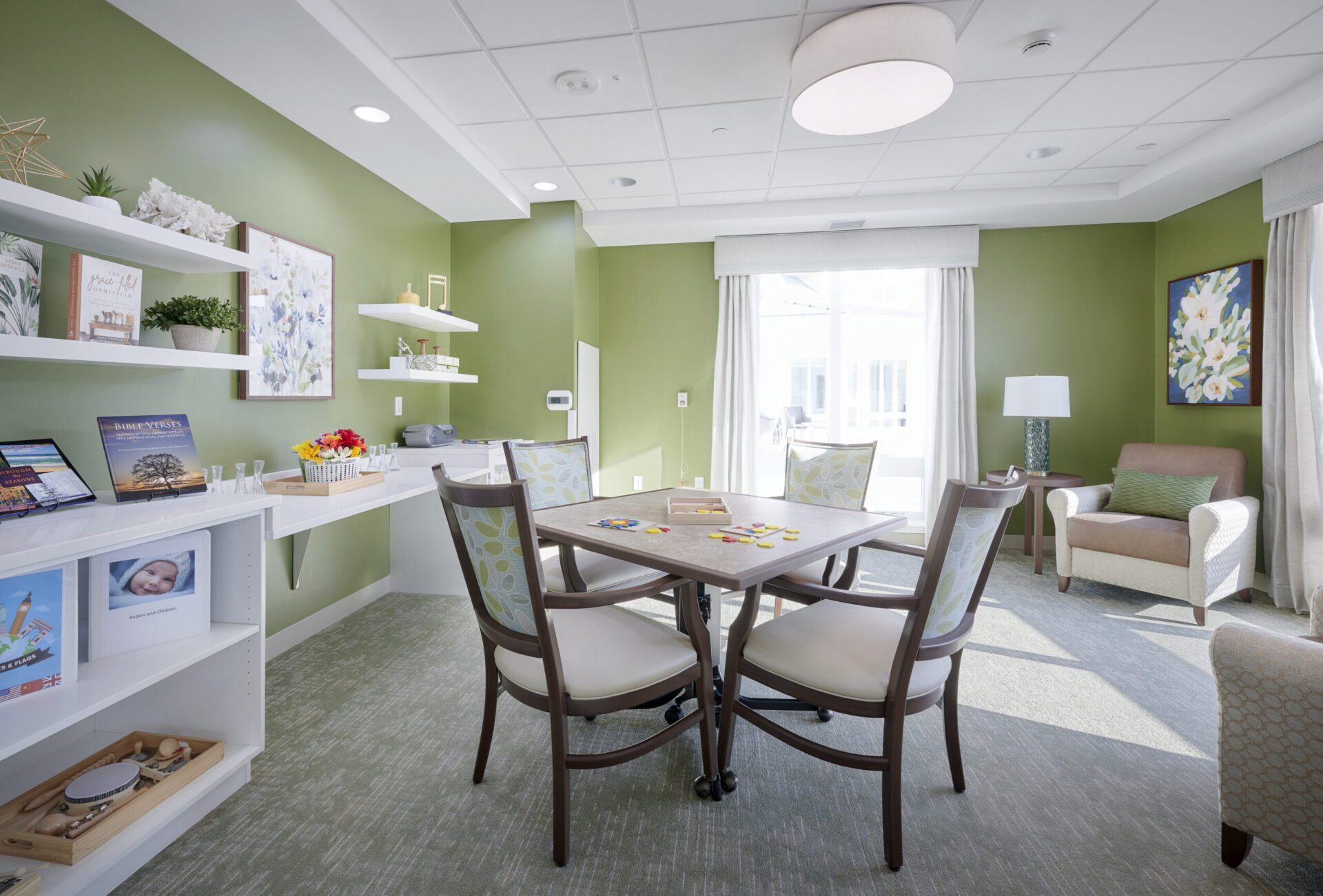
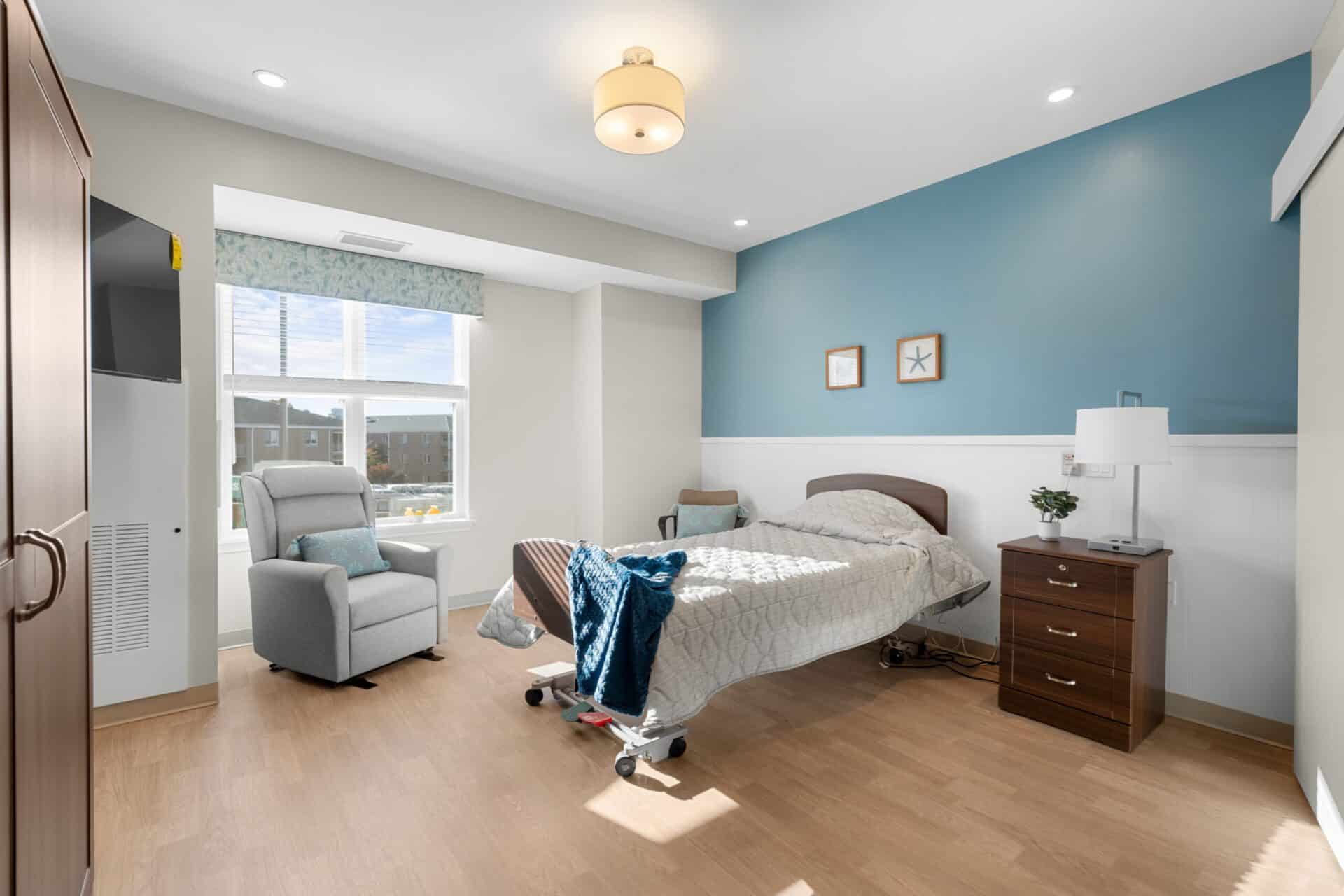
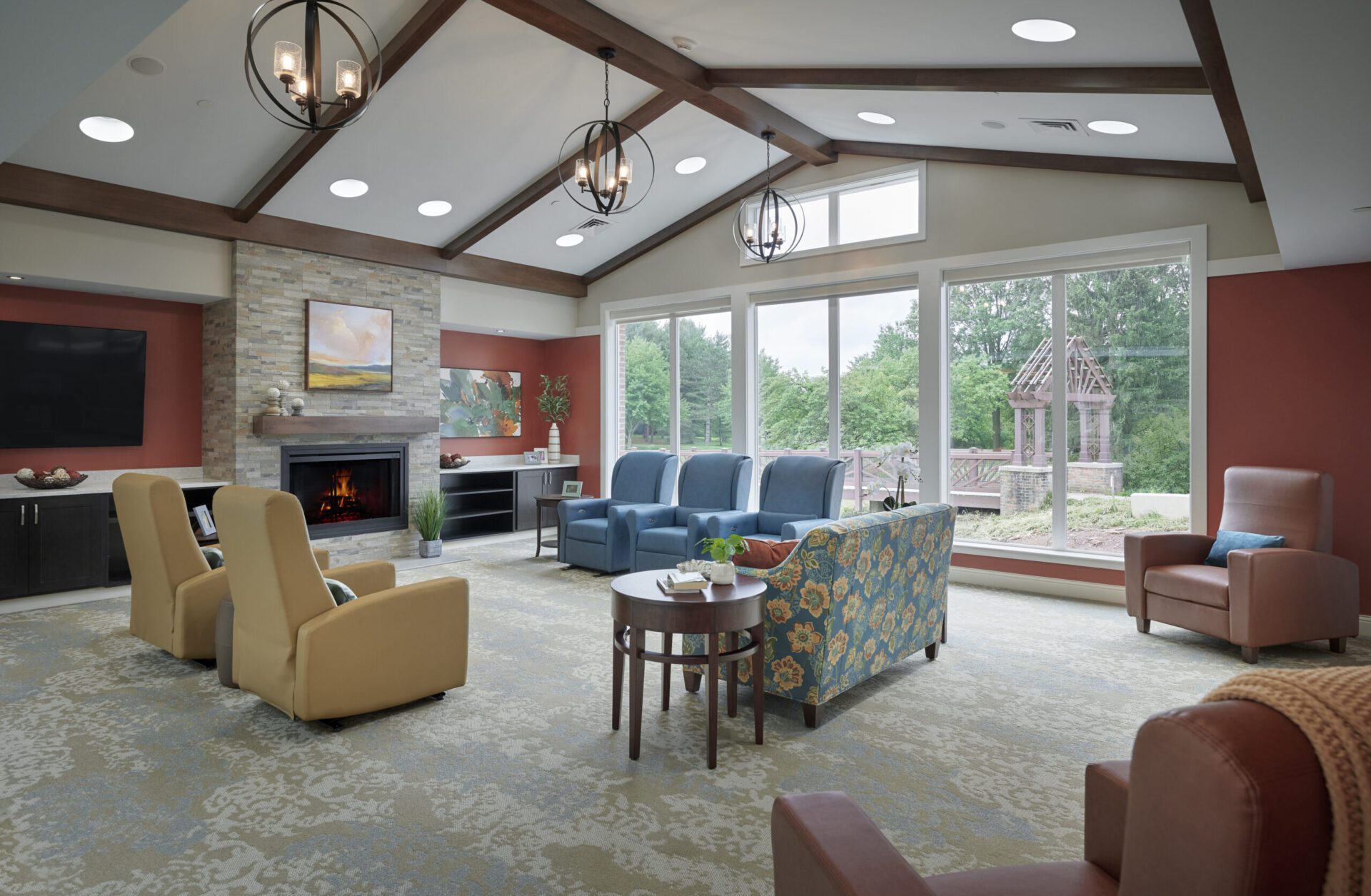
Living Branches’ Serenata Memory Care communities are built specifically for residents living with dementia, not with dementia as an afterthought.
Design features include:
- Intuitive layouts to prevent disorientation for residents who like to walk
- Circadian rhythm lighting that supports regular sleep-wake schedules
- Nooks where residents can browse a “shop,” have a cup of coffee, and safely engage in other real-world activities
- Lower beds for easy transferring to a chair
- Lower windowsills so residents can easily enjoy the views from their rooms
- Safety features in bathrooms
- Abundant natural lighting from large windows and skylights in common areas
- Secure outdoor areas with garden beds where residents can enjoy fresh air, sunlight, and even get a little dirt on their hands
- Private lounges for residents to step away for a moment or work one-to-one with a caregiver
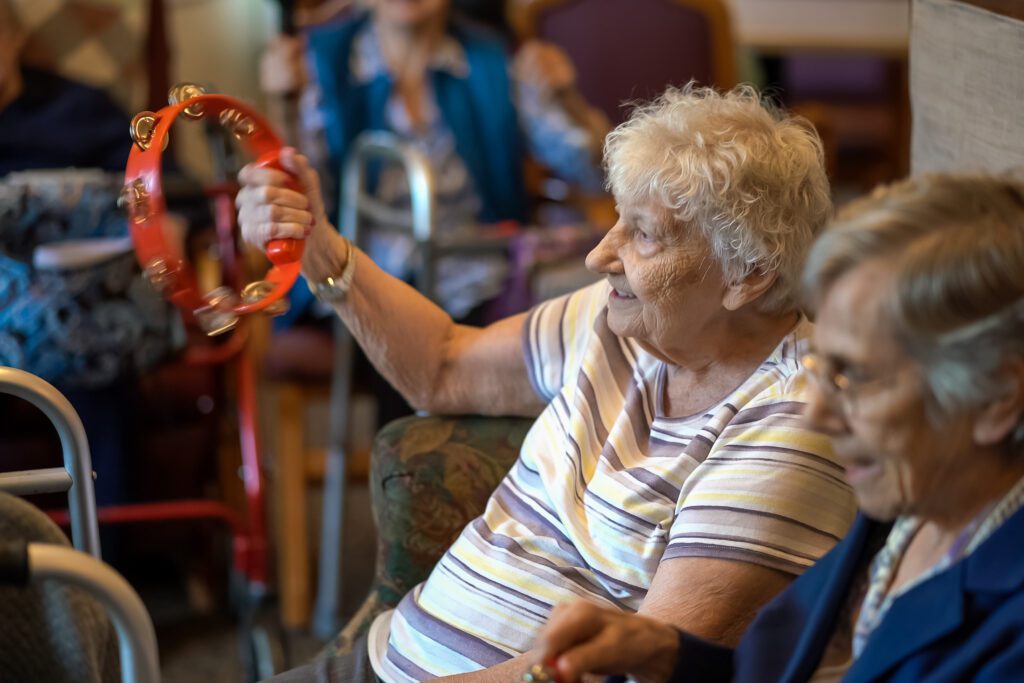
- Group spaces where residents can play games, listen to music, play trivia, sing and dance, and do other activities together
Importantly, these weren’t features added to an existing building. They were designed into the blueprints on the recommendation of our life enrichment teams, nursing teams, and memory care specialists long before the walls went up.
If you are still deciding between levels of care in the first place, our guide to Memory Care vs. Assisted Living walks through the difference.
Wondering whether a community can care for your loved one through every stage? Schedule a visit to see how Serenata Memory Care spans both the personal care and skilled nursing levels, so you only have to choose a community once.
Frequently Asked Questions
Both cognitive and physical needs increase over time, leading to difficulties with walking, eating and swallowing, toileting, and other activities of daily living. Late-stage dementia also requires close monitoring and treatment of infections, more complex medication management, and attention to the impacts of lower mobility.
Many residents can benefit from a dedicated dementia neighborhood in skilled nursing — but most memory care communities provide care only at the assisted living level. So when a resident’s medical needs change, they move to a standard skilled nursing setting where the staff might not be dementia specialists. The exception is a community that offers memory care at the skilled nursing level, where dementia-trained care continues alongside the higher level of medical support. At Living Branches, Serenata Health Care provides exactly that, on the same campus as Serenata Personal Care.
Some do, but many provide skilled nursing without dementia-trained staff. A person with advanced dementia and high medical needs may end up in a standard nursing setting where caregivers are not specialists in cognitive care. The better option is a community that offers memory care at the skilled nursing level, like Serenata Health Care at Living Branches, so medical and dementia care happen together.
Memory care is a secured, dementia-specialized setting with team members trained in cognitive care. A nursing home, or skilled nursing facility, provides a higher level of medical care but is not always dementia-specialized. The two terms are not mutually exclusive: the strongest option is memory care delivered at the skilled nursing level, so a person receives both at once.
Memory care neighborhoods are secured to keep residents safe from unsafe wandering, but a well-designed community does not feel like a locked ward. Serenata’s neighborhoods include secured indoor and outdoor spaces designed to feel like home, so residents can move, garden, and enjoy fresh air safely.
Memory care at the skilled nursing level is relatively rare — most communities offer memory care only at the assisted living (or personal care) level, so families searching for both have to look specifically.
In Montgomery County, PA, Living Branches offers memory care at the skilled nursing level through Serenata Health Care, with neighborhoods at Dock Woods in Lansdale and Souderton Mennonite Homes, serving Montgomery and Bucks counties.
Costs vary by community, but memory care at the skilled nursing level costs more than memory care at the personal care or assisted living level because of higher staffing and medical support needs.
At Living Branches, we’re happy to walk through pricing and payment options with families, including how Serenata Personal Care and Serenata Health Care differ in cost and what’s included at each level.
Many families use a combination of options. Private pay and long-term care insurance are the most common. Pennsylvania’s Medical Assistance (Medicaid) program can also help cover skilled nursing care for those who qualify, though it involves a five-year look-back on how assets were spent and specific rules around spousal division of assets.